

Displayport 1.4 Vs Hdmi 2.0 B
HDMI 2.0 vs 1.iv: The basics
HDMI ii.0 was announced as a standard in late 2013. It got a lot of people confused, wondering if they all of a sudden needed to throw abroad their TVs in social club to become on this latest tech tendency.
Equally far as tech advancements go, HDMI 2.0 is a pretty friendly one. It'due south as much a standard of software as hardware, and cables designed for HDMI one.iv systems will work but fine with new HDMI 2.0 devices.
What you lot need to make sure is that both ends of your entertainment chain – your Telly and Blu-ray player, for example – back up the standard. It'll hateful they're geared up for the new standards we'll dig into shortly. Some previously HDMI 1.4 hardware needs nothing more than a firmware update.
HDMI 2.0 is a reimagining of the interchange between your bits of home amusement gear, ane that factors in the immense amount of data required to go loftier-quality audio and video to something like a 4K 3D-capable Telly.
HDMI two.0 itself isn't actually most resolution, though, but bandwidth. More than bandwidth is what makes all of its new standards possible. HDMI 2.0 systems can transfer data at up to 18Gbps, up from 10.2Gbps in HDMI i.four.
In terms nosotros're all more likely to become on with, 18Gbps is 2,250MB a 2d. For a little more context, normal Blu-rays max out at 54Mbps, or six.75MB per second. The HDMI pipe is wider than a dual carriageway.
Here are the kinds of goodies that pipage can deliver.
HDMI 2.0 vs ane.4: 4K video at 50p and 60p
HDMI 1.4 introduced the kind of bandwidth required to deliver 4K video, but HDMI two.0 can dole out 4K video without compromise, at 50 and 60 frames per second. In HDMI ane.iv, the charge per unit of 4K was limited to 24 frames per second.
 24p and 30p are perfect for watching films, just there are times when the actress speed of 50p and 60p come in handy. Gaming could make great use of 60p content, while more films are being shot at higher frame rates, giving quite a dissimilar look from that of wearisome sometime traditional cinema.
The most famous of the lot is Peter Jackson's The Hobbit, which was shot in 48 frames per second. We weren't besides keen on the look of 48p, which gave the flick the look of a depression-rent lather opera, but apparently it's the futurity.
HDMI 2.0 vs 1.4: Enough bandwidth for ten-flake and 12-bit colour at 4K
Just as important as the college frame rates for Ultra Hard disk drive/4K HDMI two.0 enables, the extra bandwidth too means HDMI is able to ship 4K video at 10-scrap and 12-fleck color depths. With HDMI 1.4 it was limited to 8-chip.
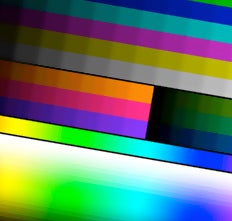 What's the departure between 8-fleck, 10-flake and 12-bit colour? It tells you how much data goes into each pixel's colour. viii-scrap colour results in a colour palette of 16.vii-million colours – it'due south a figure you may take heard floating about if you've ever read into buying a screen of some kind.
Equally 12-bit colour ramps-upward the specificity of the colour information that goes into rendering an image, the total number of possible colours is 68.7 billion. That exponential ramping-up of information is what makes transporting 4K 12-bit such a information-heavy job.
These college colour bit rates are oft labelled "deep color", then if you come across that term you now know what it refers to.
It's this ability that unlocks High Dynamic Range, which gives you lot video data required to more and brighter colours.
Related: HDR TV Explained
HDMI 2.0 vs i.four: Dual video streams to the same screen
Hither's a groovy one: HDMI 2.0 supports the commitment of ii different video streams, which can be delivered to the same screen. Exactly what will happen to those streams volition depend on what the box (maybe a Telly) at the end does with them.
This improvement is really a pure bandwidth result. 18Gbps gives a comfortable pipe for 2 loftier bit-rate 1080p streams with audio.
Information technology sounds similar a gimmick, just this adds a hardware standard for something we've seen in proprietary form before now. With a 3D Goggle box, it opens up 'dual view' Television set watching, where y'all'd utilise a pair of 3D glasses to deliver two completely departure streams to two people watching the same Television set.
Two people could be watching dissimilar Television set channels, or one could be gaming while the other watches TV. Anti-social? Sure, merely the other person would probably just end up playing on their telephone if forced to picket the same thing every bit you anyway. Samsung showed off this exact kind of scenario in action at CES 2014. Nosotros'd love to run into this adopted more widely, especially as the resolution split in a 4K TV would exist much less credible than in a 1080p i.
HDMI ii.0 vs 1.4: Upward to 32, 1536KHz sound channels, and Dolby Atmos
 HDMI 2.0 makes huge updates to the often-neglected side of AV – audio. From being able to transmit simply viii channels, you tin can now send 32.
This is what has enabled the Dolby Atmos standard to exist moved over to home movie theatre receivers. It was one time the preserve of simply a few super high-end cinema sound systems, but you can now get it in your home.
Dolby Atmos is all almost giving your much more accurate positional sound, making sound appear 3D for a more immersive picture palace experience.
Does Dolby Atmos mean littering your lounge with dozens of speakers so, like an Atmos cinema? Thankfully not. Instead, Atmos receivers make use of the much more nuanced aqueduct information provided past HDMI 2.0 and an Atmos mix, and so play with it to provide better spatial audio with a relatively conventional 5.1-7.2 style speaker setup (with additional meridian channels).
The quality of the audio streams has been improved too. Sample rates now go upwards to 1536KHz. In a full 32-aqueduct system that means you'd get 48KHz per channel. That's decent if non the sort of sample rate that become sound nerds drooling. 24-bit, 192KHz is where it's at for that crowd. Of course, those sort of frequencies are perfectly possible with HDMI 2.0, just not if y'all desire 32 channels of sound.
HDMI ii.0 vs 1.iv: Control all your gadgets through HDMI
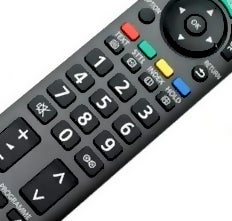 Ane of the bottom talked-about features of HDMI is its re-working of CEC, sometimes referred to equally CEC 2.0. This stands for Consumer Electronics Command, and lets one device send remote command-style signals to another over HDMI.
Information technology's effectively a stand up-in for a proper universal remote command system – something that would be handy merely is notwithstanding to plough up. With HDMI 2.0 you can – in theory – control up to 15 devices with the one remote. It was around in HDMI 1.4 just at present information technology's better.
Simply needing one remote command and not having to splash the greenbacks on i of those expensive Universal ones? Yes please. Opting for CEC is besides more than attractive – in one sense – than using a phone's IR transmitter as a universal remote (a feature of higher-stop phones) every bit there's no lengthy setup involved.
All the same, for it to really have off, the manufacturers of the boxes nosotros're going to command with CEC need to cover the standard, and assist people know it exists. Or we'll never get anywhere with it.

Displayport 1.4 Vs Hdmi 2.0 B,
Source: https://www.trustedreviews.com/opinion/hdmi-2-0-vs-1-4-2913356
Posted by: prattobsed1978.blogspot.com
0 Response to "Displayport 1.4 Vs Hdmi 2.0 B"
Post a Comment